
Shooting a music video tomorrow in one room
A fixed six-hour plan for the evening before and the shoot day: one wall, one lamp, three passes and inserts, all in a single room.
The steps
- 01
Pick one concept 30 min
Choose one idea you can finish in one room and write it in three lines: where you stand, what the camera does, what changes across the song. A performance against one wall is the safest. Skip the second concept and the backup plan. Write the shot list on paper: three passes and a list of inserts.
- 02
Choose the wall and clear the room 30 min
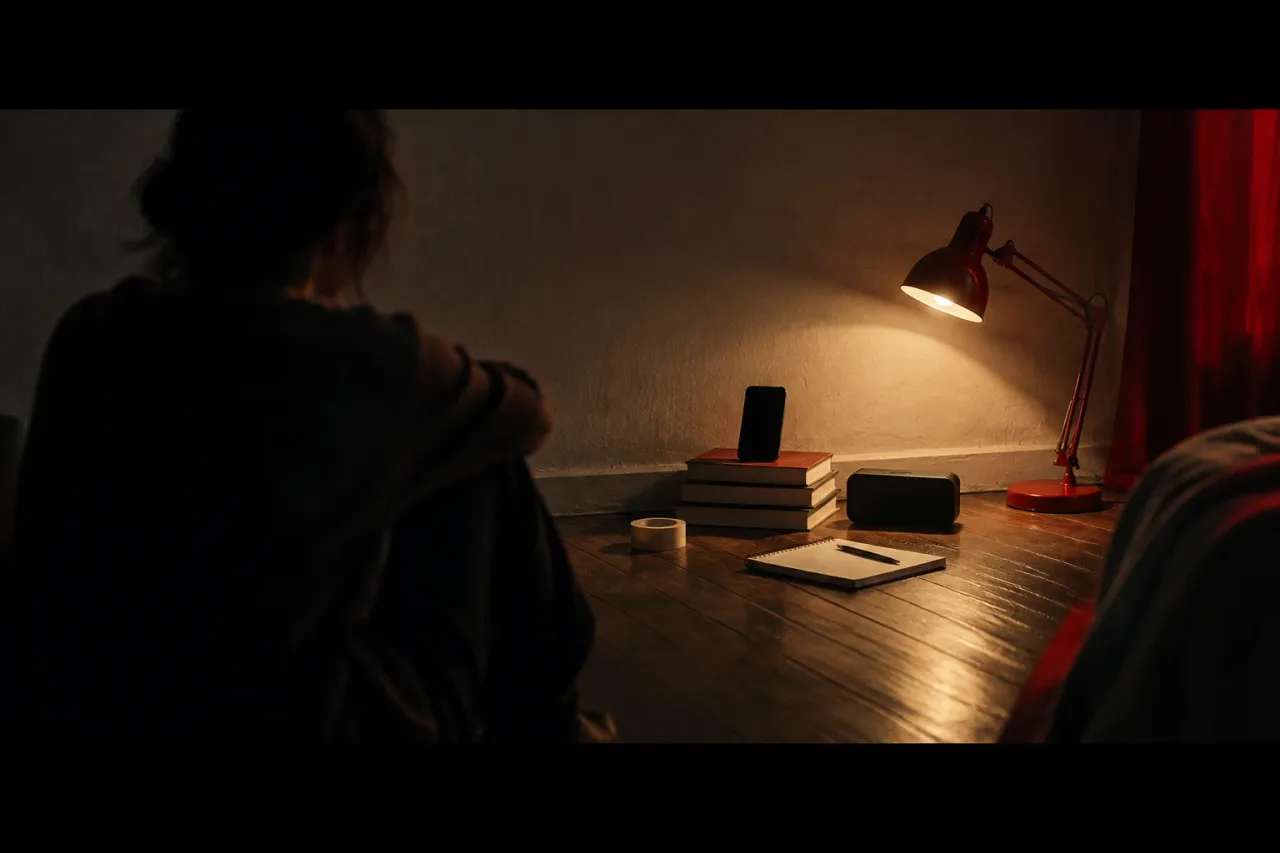
Pick the plain wall with the most floor in front of it, ideally two metres or more so your shadow stays off it. Move furniture out of frame and out of reflections. Skip tidying the rest of the room. Mark your standing spot with tape.
- 03
Set one practical lamp 30 min
Put one ordinary lamp with a warm bulb at head height, 45 degrees to one side of your standing spot. Set the camera white balance to 3200K. Switch off the ceiling light and close the curtains so 5600K daylight does not fight it. Shoot a ten-second test and check it on the biggest screen you have.
- 04
Shoot the wide pass 75 min
Frame the wall and your whole body in 16:9 at 25 fps, camera locked on a tripod or a stack of books. Start recording, clap once, play the track and sing it through, three full takes. Skip reviewing between takes. Watch one clip at the end.
- 05
Shoot the mid and close passes 100 min
Bring the camera in to a mid shot from the waist up, then to a close-up of head and shoulders. Sing the full track each time, two takes per pass. Keep the lamp and your mark where they were. Skip changing outfit or moving the wall. Each pass gives the edit a new angle.
- 06
Shoot the inserts 60 min
Film eight to ten shots of things in the room: hands on a table, the lit bulb, a curtain edge, your shoes on the tape mark. Hold each for 6 to 8 seconds, still or with a slow push-in. Skip anything outside the room. These give the edit places to cut away.
- 07
Back up and mark the best takes 35 min
Copy every clip to a second drive before you touch the room. Then rename the best take of each pass, so the edit starts from your picks. Skip cutting anything yet. If the room is rented or borrowed, put the furniture back as you found it.
If it goes wrong
The ceiling light stays on
Overhead light puts shadows under your eyes and fights the lamp's warm colour. Switch it off. If the room feels too dark, move the lamp closer instead of adding a second one.
The track drifts from the picture
Clap once at the start of every take. The spike on the camera's own audio is a marker you can line up with the song in the edit.
The frame changes between passes
Moving the lamp, your mark or the aspect ratio between passes makes the cuts jump. Lock all three after the test shot and move only the camera.
Candles for mood
Skip candles and fairy lights near curtains, because they are a fire risk in a small room. A lamp with a warm bulb gives the same glow with nothing burning.
Why this order works
Whatever you decide tonight is something you do not argue about tomorrow. One concept, one wall and one lamp fix the picture before anyone is tired, and the tape mark fixes where you stand, so every pass matches the last.
The wide pass goes first because it gives you a complete video on its own. If the day falls apart, you still hold three full takes of the song. The mid and close passes come while your voice is warm, and they give the edit a new angle on every line. Inserts go last because they need no voice and no track.
For the shot list, how to write a music video shot list has a worked example, and StudioBinder has shot lists if you prefer a screen to paper. For the lamp, the five lighting looks show where else it can sit.
What to leave for another day
Leave the second location, the costume change and the lyric text. Each one adds a decision, and you have one room. Leave the colour grade for the edit, where one correction across all the clips will match them.
A performance video can grow from here once you have seen what the first one needed.
Apps that can help
Related
 Shot craftSome effort90 min
How to write a music video shot list, with a worked example
Build a shot list for a three-minute song in 90 minutes: song map, shot counts, lengths in seconds and a shoot-day order. Colour and lightSome effort100 min
Five music video lighting looks, with recipes
Five colour and lighting recipes for music videos: kit, light position, white balance, wardrobe and a DaVinci Resolve grade for each.Frequently asked questions
Can you make a whole music video in one room?
Yes. One wall, one lamp, three framings of the full song and a set of inserts give you enough different pictures to cut a three-minute track. The room stays the same, so the variety comes from camera distance and the cutaways.
How many shots do I need from one room?
Plan three passes of the full song, wide, mid and close, plus eight to ten inserts. That gives you three angles on every line and a handful of cutaways. Write them on one page before you start.
What frame rate should I use for a one-room shoot?
This plan uses 25 fps for every clip. 24 fps also works if you prefer it. Pick one and keep it for the whole shoot, because mixed frame rates cause trouble in the edit.
Do I need permission to film in my room?
If the room is yours, you do not need anyone's leave. If it is rented or borrowed, ask the owner before you move furniture or film. Use only a song you own or have permission to use, and make sure anyone on camera agrees to be filmed. This is not legal advice.