
The light is going and we still need the chorus shots
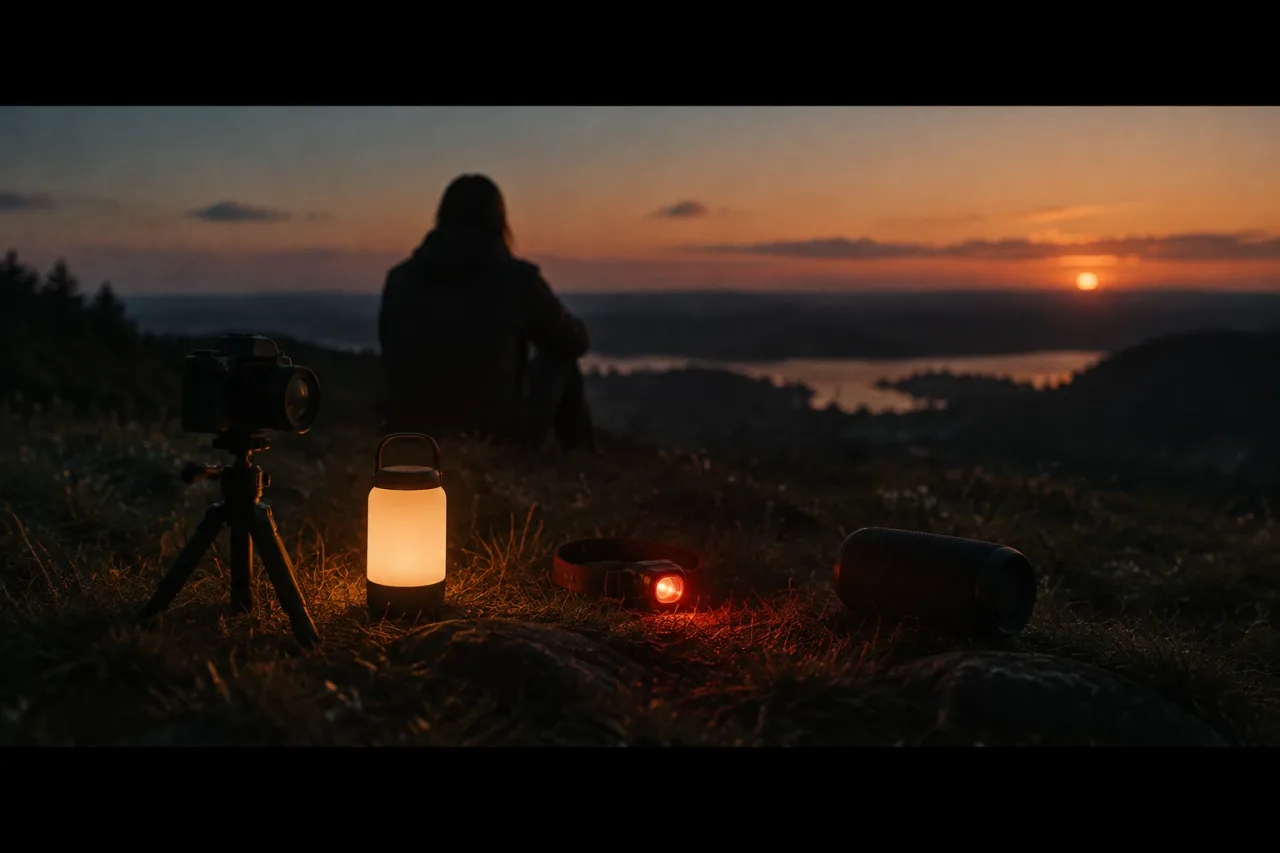
A 45 minute plan for getting the chorus wide and close while daylight fades, with a safe spot, a white balance switch and one warm lamp.
The steps
- 01
Pick a safe spot and set the frame 5 min
Choose flat, open ground away from roads, water and drops. Put the singer where the last light hits the face, with the sun low behind the camera or to one side. Lock the tripod, check the frame, and play the chorus once. Skip scouting for anything better.
- 02
Shoot the chorus wide first 10 min
This is your hero shot. Set 25 fps, a 1/50 shutter and white balance 5600K, then run the chorus on playback three times without stopping. Keep the singer small in frame with sky and ground visible. Skip reframing and reviewing between takes.
- 03
Move in for the chorus close-up 8 min
Move the tripod to a head-and-shoulders frame, with the face toward the brightest part of the sky. Run the chorus twice, one take that holds still and one handheld take that drifts in slowly. Skip the verse. Check focus on the eyes once, then leave it.
- 04
Switch white balance and bring in the lamp 7 min
When the sky goes grey-blue, set white balance to 3200K and switch on your lamp. Put one warm battery lamp about a metre from the face, level with the chin and slightly to one side. Leave candles, fire and car headlights out of it.
- 05
Shoot the chorus close by lamp light 10 min
Run the chorus close-up twice more with the lamp as the key light. The background will fall to dark blue, and that is the look you want. Open the aperture first, then raise ISO in small steps, and keep the shutter at 1/50. The wide shot has gone with the light.
- 06
Pack away slowly by head torch 5 min
Put on a head torch before you need it. Wrap leads, fold stands, and count every item against the kit list, ending with the card and the lamp. Walk the ground once with the torch. Leave inserts, retakes and any chat about the edit until tomorrow.
If it goes wrong
Auto white balance drifts
Auto white balance changes colour from take to take as the sky fades, so your cuts will jump. Set it by hand at 5600K, change it once to 3200K for the lamp, then leave it.
Using a car as a light
Do not park a car and use its lights, and never film on or beside a road. Use a battery lamp on flat ground, well away from traffic, so the singer can move without watching their feet.
Chasing inserts
Hands, feet and sky shots feel quick to grab, and they eat the minutes the chorus needs. Write them on the shot list and shoot them another evening at the same time of day.
Packing blind
Gear gets left behind after dark. Put the memory card in a zipped pocket first, then pack in the order of the kit list with the head torch on.
Why this order works
In the last half hour the light changes from take to take, so the first take and the fifth can look like different days. The chorus wide goes first because the edit hangs on it. If you leave with one frame, it should show the singer, the place and the sky together.
The close-up comes second. A face holds up in dim light better than a landscape does, and the lamp can sit close. Then the colour shifts. Daylight is 5600K and tungsten is 3200K, and setting each by hand keeps the grade simple. The practical light pass goes last because it looks better as the sky darkens. For lamp positions, see five lighting looks.
What to leave for another day
Leave the insert shots: hands, a lamp switching on, feet in grass, the sky. They look best shot at the same time of day on another evening, when you have time to frame them well. Leave the verses, the walk-ins and any pan across the landscape too.
Leave anything that needs a road, water, a height or a flame. Nothing in this plan needs them. While you pack, write the missing shots on your shot list so the next evening starts with a plan.
Related
 Shot craftSome effort90 min
How to write a music video shot list, with a worked example
Build a shot list for a three-minute song in 90 minutes: song map, shot counts, lengths in seconds and a shoot-day order. Colour and lightSome effort100 min
Five music video lighting looks, with recipes
Five colour and lighting recipes for music videos: kit, light position, white balance, wardrobe and a DaVinci Resolve grade for each.Frequently asked questions
How long does it take to shoot a chorus in fading light?
This plan takes 45 minutes. Five to set the frame, 18 for the chorus wide and close in the last daylight, 7 to switch white balance and light, 10 for a lamp-lit close-up and 5 to pack away.
What white balance should I use at dusk?
Use 5600K while there is daylight on the face. When you switch to a warm lamp, change to 3200K. Set both by hand so the colour does not drift between takes.
Can I film the chorus at night with no extra lights?
Phones and small cameras get noisy and soft in near-dark. One warm battery lamp near the face gives you a usable close-up and a dark blue background. Keep the wide shot for the daylight.
Do I need permission to film at dusk in a public place?
Public and private land can both have rules about filming, and a quiet spot is not always free to use. Ask the owner, and only film people who have agreed to be in it. Our UK answer covers the basics, and this is not legal advice.