Concepts Ideas Some effort30 min
The seven types of music video, and which suits your song
Seven music video types, what each costs in time, and a 30-minute method to choose one from your lyric, tempo and kit.
 Frame the Song Editors 4 min read
What do you need before you start?
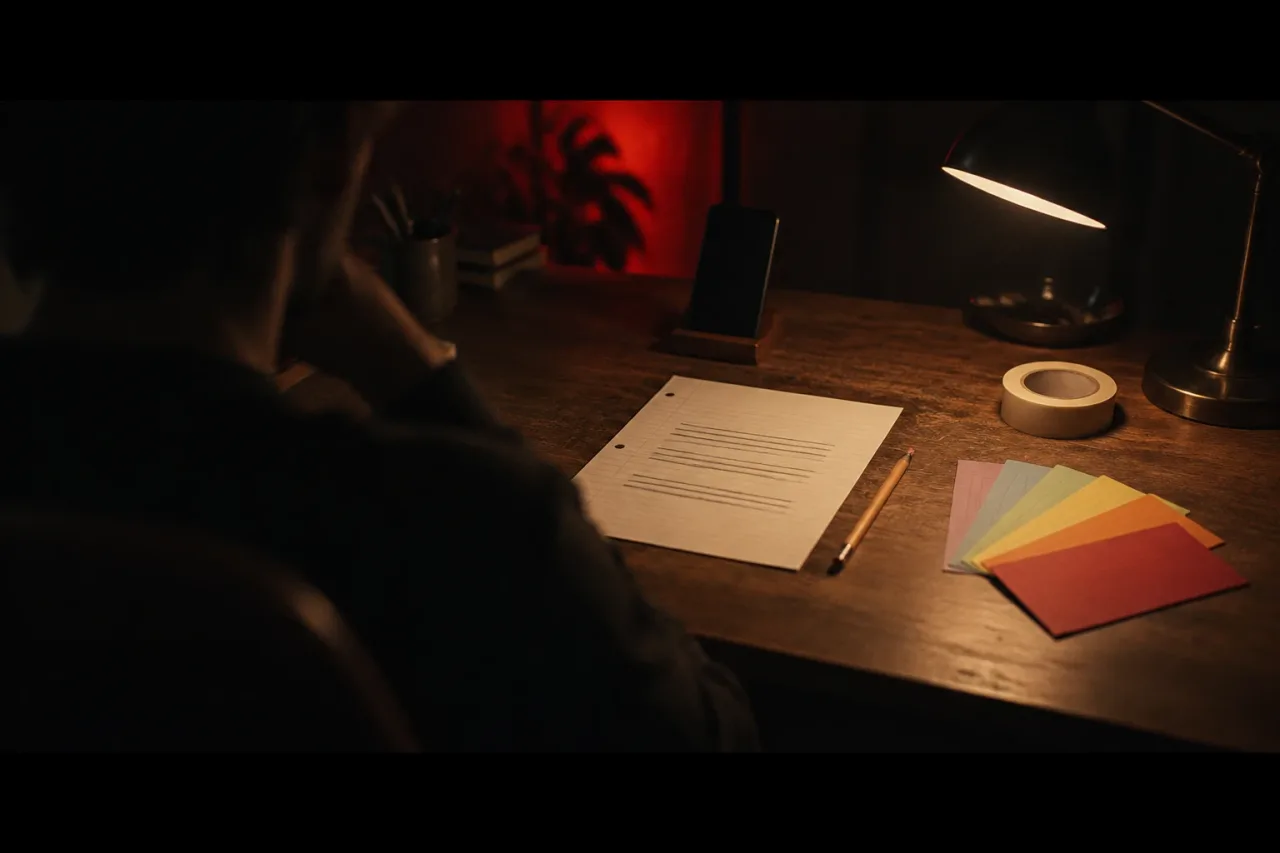
You need the song, the lyrics on paper, a pen and 30 minutes. Write down your kit as it really is: a phone, one lamp, one location, one friend, or none of those. The seven types are performance, narrative, concept, lyric video, visualizer, found footage and animation. The one-take is a technique that sits on top of performance, narrative or concept. Each section below says what the type is, which songs suit it and what it costs in time, then gives one idea to steal. Times assume a three-minute song and a crew of one or two.
Which types put a person on screen?
Performance, narrative and concept all put a person on screen, and they differ in how much they invent.
- Performance. The artist sings to camera. It suits songs carried by the voice, such as ballads and guitar pop. Plan one shooting day and one editing day. Idea: a plain orange wall, a 50mm lens at chest height, one 3200K tungsten lamp from the left, a cut every two bars.
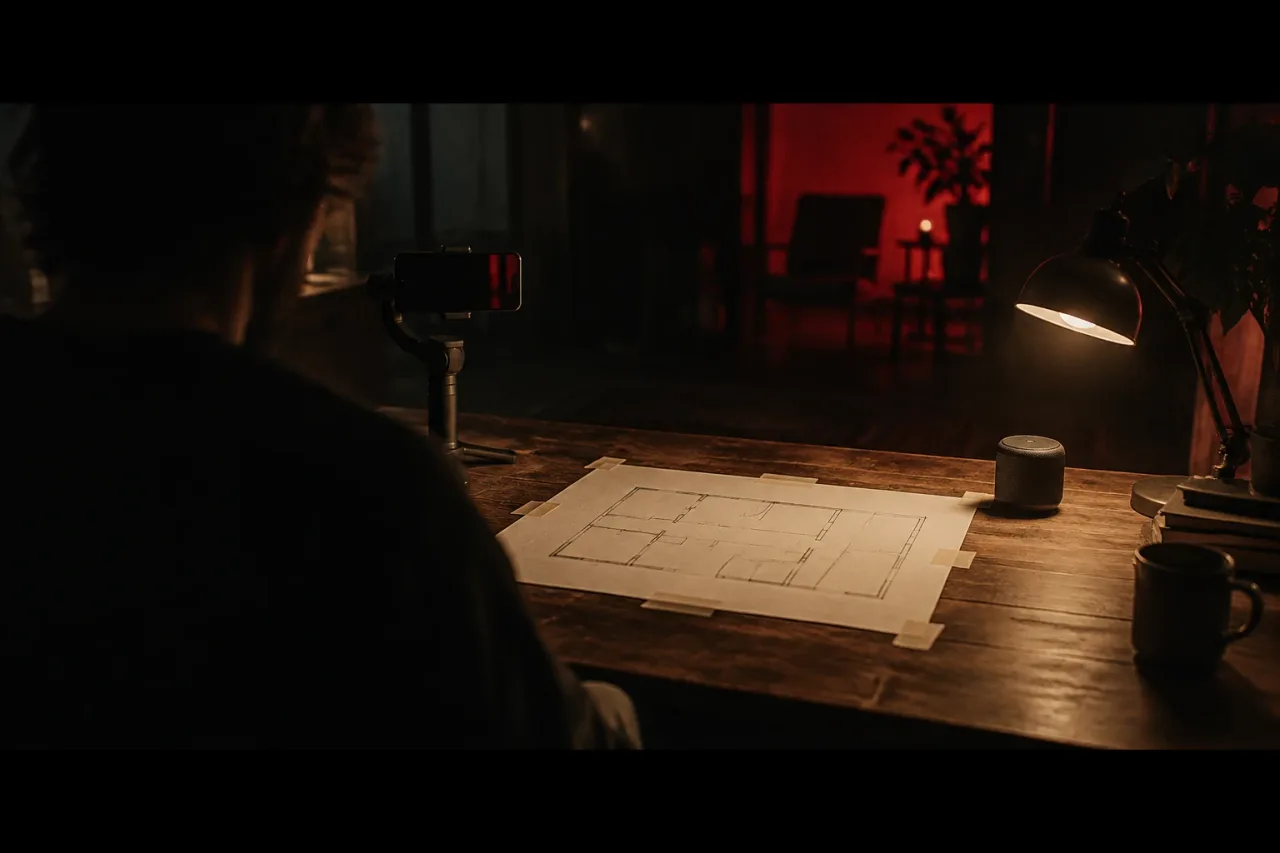
- Narrative. A short story acted out to the song. It suits lyrics with a named person or a clear event. Plan two shooting days and 20 to 30 shots. Idea: someone empties a flat into five boxes, one room per verse, every chorus in the bare front room.
- Concept. One visual rule held for the whole song, with no plot. It suits songs about a single feeling. Plan half a day. Idea: every shot framed through a doorway at 2.39:1, the wall colour changing each verse.
When nobody gets filmed, which type fits?
A lyric video or a visualizer fits when nobody is going to be filmed. A lyric video puts the words on screen in time with the voice. It suits rap, spoken word and any song with a hook people sing back. Plan three to five hours in an editor. Idea: white words on black, one line per bar, a hard cut on the first beat of each bar. A visualizer puts shapes and colour on screen that move with the sound. It suits instrumentals, ambient and electronic tracks. Plan one to two hours to generate and a few more to tidy. Idea: slow blue forms that swell on the kick. Neural Frames makes audio-reactive effects that pulse with the music.
What about found footage and animation?
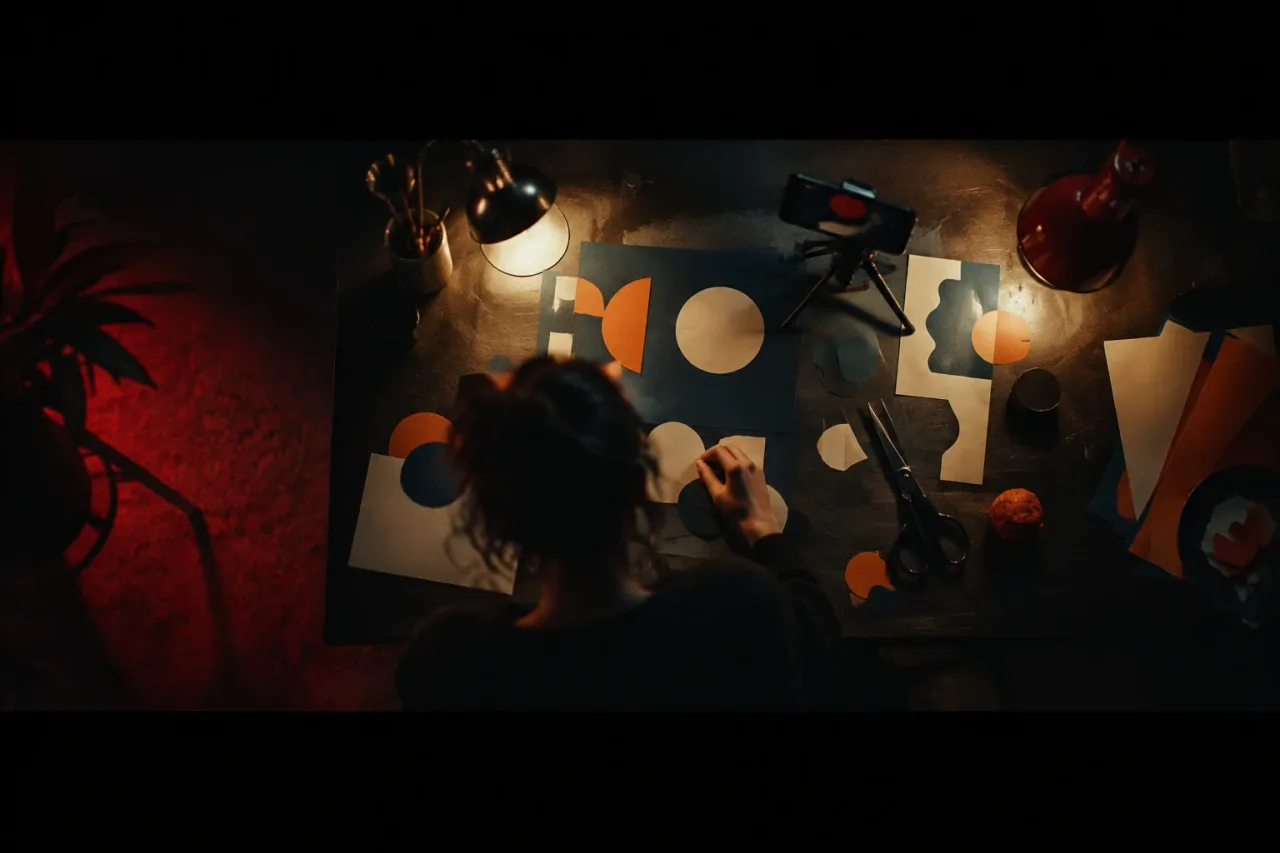
Found footage borrows pictures that already exist, and animation makes every picture yourself. Found footage suits songs about memory, home or time passing. Plan six to ten hours of gathering and cutting. Use only footage you own or have permission to use, and ask anyone who appears in it. Idea: ten years of your own phone clips of one street, graded to one warm look so the years match. Animation suits songs with dreamlike or impossible lyrics. It is the slowest type, about a month of evenings. Drawn on twos at 25 fps, a three-minute song needs about 2,250 pictures, so animate only the choruses. Idea: a paper cut-out figure moved by hand on a table, shot from above with the phone locked on a stand.
Where does the one-take fit?
The one-take fits on top of a performance, narrative or concept video as a way of shooting it. The whole song is one unbroken shot, so a three-minute song means a 180-second take. It suits songs with a steady build, because the camera has time to travel. Plan a day of rehearsal and about 10 run-throughs, since one mistake spoils the take. Idea: a handheld camera follows the singer from kitchen to hallway to back garden, and the chorus lands as the door opens. Put tape marks on the floor. Keep the route inside one building or one private garden you have permission to use. The glossary entry on the oner covers the vocabulary.
How do you choose in 30 minutes?
Run five checks in this order and one type will be left standing.
- Read the lyric and underline every person, place and event (8 minutes). Many events point to narrative. One feeling points to concept or performance. Few words point to a visualizer.
- Find the tempo (4 minutes). Under 80 BPM suits slow push-ins and long shots. Over 120 BPM suits a cut every one or two bars.
- List your kit (5 minutes): a person who will perform, a light, a location, an editor. If the only singer you have is a photo, Muzie can turn it into a lip-synced performance across the whole song.
- Count your time (3 minutes). An evening fits a lyric video or visualizer. One or two days fit performance, concept or found footage. Four days fit narrative. A month fits animation.
- Write one sentence for the idea and cross out the rest (10 minutes).
What goes wrong, and how do you make it easier next time?
Most picks fail because the idea is bigger than the kit, so shrink the idea before you drop the type. Three mistakes come up often: choosing narrative with no one to act, choosing animation with a free weekend, and mixing four types in one video. Keep to one type and borrow one trick from a second, such as a performance video with paper-animation inserts in the choruses. If your energy runs out halfway, cut the video down to the first verse and the last chorus, or turn a narrative into a concept with one repeated frame. For next time, keep a one-page note of your kit and your free hours, and write the one-line idea before the final mix is done.
Frequently asked questions
How many types of music video are there?
This guide uses seven: performance, narrative, concept, lyric video, visualizer, found footage and animation. The one-take is a technique you add to a performance, narrative or concept video. Other writers split the list differently, so treat the seven as a working set.
Which type of music video is cheapest to make?
A lyric video or a visualizer, because nobody has to be filmed. DaVinci Resolve is free and covers the editing for a lyric video. Plan three to five hours for a lyric video and one to two hours to generate a visualizer.
Can I make a performance video without a camera?
Yes. Muzie turns a photo of a person, a pet or a drawing into a singer lip-synced to your vocal across a whole song. You see the token price before you generate, and full songs up to 6 minutes need a paid plan.
Is a one-take video harder than a cut video?
It takes more rehearsal, because one mistake spoils the whole take. Plan about 10 run-throughs and mark the route with tape. Keep the route inside one building or one private space you have permission to use.