
Treatment
Also called: Video treatment, Director's treatment, Music video pitch
What it means in plain words
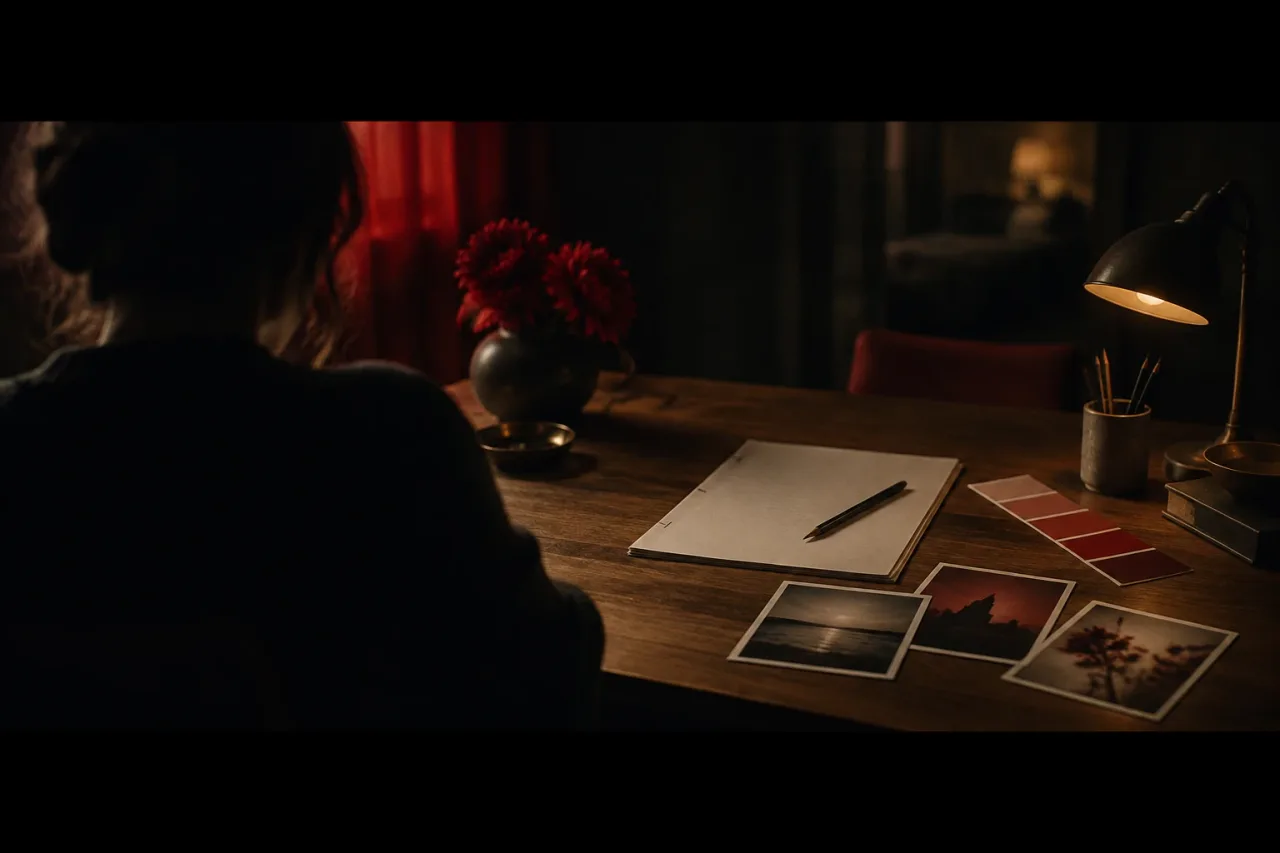
A treatment is the written pitch for a music video. It tells the artist, a producer or a label what the film will look like before anyone picks up a camera. It runs one to five pages. It holds four things: the concept, the look, the references and the key images.
The concept is the idea in a short paragraph. The look is colour, light, lens and movement. References are films, photographs or paintings that show the mood. Key images are the four or five frames you want the reader to remember.
What it looks like in practice
A ballad might get one page. The concept is a singer alone in a kitchen with a green wall, lit at 3200K by a single practical lamp, shot at 25 frames a second on a slow push-in that holds for the whole verse. Three reference photos sit under the paragraph.
An up-tempo single might get two pages. The idea is one continuous take in 16:9, with the camera walking backwards down a corridor while friends step in to mouth one line of the chorus each. A rough shot list sits at the end, with seconds per shot.
A narrative video might get four pages. Verse, chorus and bridge map to three scenes, and a strip of five colour swatches shows how the palette changes.
Whatever you pitch, you need permission for the song, the people and the locations. Say in the treatment who has agreed.
What tends to help
Write the first line so a stranger can picture the first shot. Name where the camera is and what the light is doing. Give numbers where you have them, such as seconds per shot or the bar where the cut lands. Cut any sentence that would not change what appears on screen.
Pin your references in one place before you write. Milanote has boards that mix notes, images, video, sketches and links, which suits this. The pre-production shelf covers the tools that come after the treatment, from moodboard to shoot day.
Where the term comes from
The word comes from film writing, where a treatment is a prose outline of a story written before the script. Music video directors borrowed it for the pitch they send before a shoot.