
LUT
Also called: Look-up table, Colour LUT, Lookup table
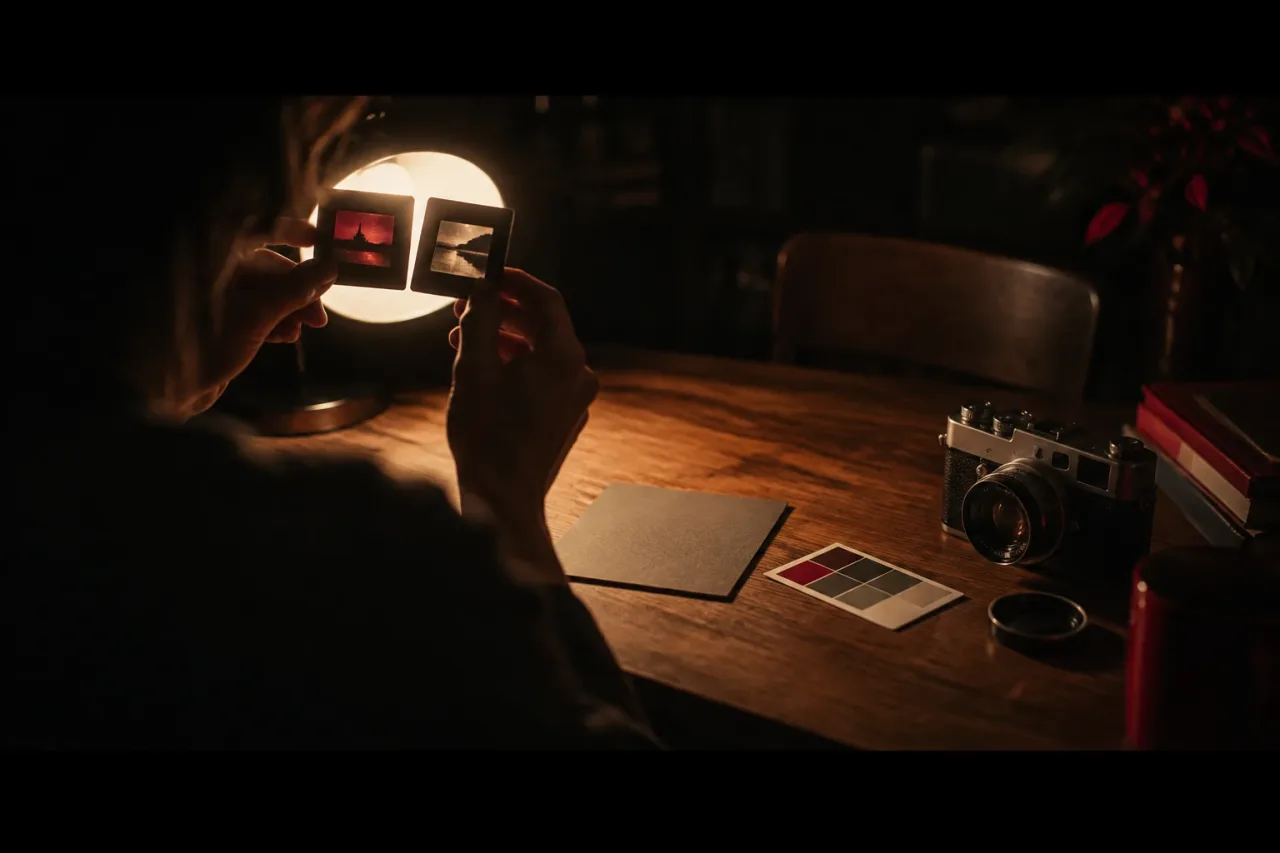
What a LUT means
A LUT is a look-up table. It is a small file that tells your software: when you see this colour, show that colour instead. Every pixel goes in, is checked against the table, and comes out changed. The change is identical each time, so one LUT gives the same result on every clip you apply it to.
There are two common jobs. A technical LUT converts log footage, which looks flat and grey, into normal contrast and colour. A creative LUT applies a look, such as warm shadows and cool highlights.
What it looks like in practice
You film a verse on a camera set to a log profile. On the monitor the clip is pale and the skin looks grey. You load a conversion LUT and the contrast returns to something you can judge.
You shoot a bedroom performance under 3200K tungsten bulbs. You add a film-style LUT and the orange walls get heavier while the blacks lift a little.
You cut a montage from clips shot on a phone, a borrowed mirrorless camera and a friend’s camcorder. You put the same LUT on all of them, so the footage starts closer together before you grade each shot by eye.
What tends to help
Expose the shot properly first. A LUT cannot bring back detail that was clipped to white or buried in black.
Match a conversion LUT to the camera profile it was made for. One built for a different log format will give you odd colour, and skin is where you notice it first.
Treat a creative LUT as a starting point. Many grading apps let you lower its strength, and a half-strength look often sits better on a face than the full version. Then fix white balance and exposure shot by shot.
If you download a LUT pack, read the licence before you use it on a release. Only use files you own or have permission to use.
For a free place to try all this, DaVinci Resolve is free and covers editing and colour correction in one app. The free kit for making a music video shows where grading fits in the whole job.
Where the term comes from
“Look-up table” is an old computing term for a list of stored answers that a program checks instead of working each one out again. Colour work borrowed the idea, because converting a colour is quicker when the answer is already written down.