
What is the difference between a treatment and a storyboard?

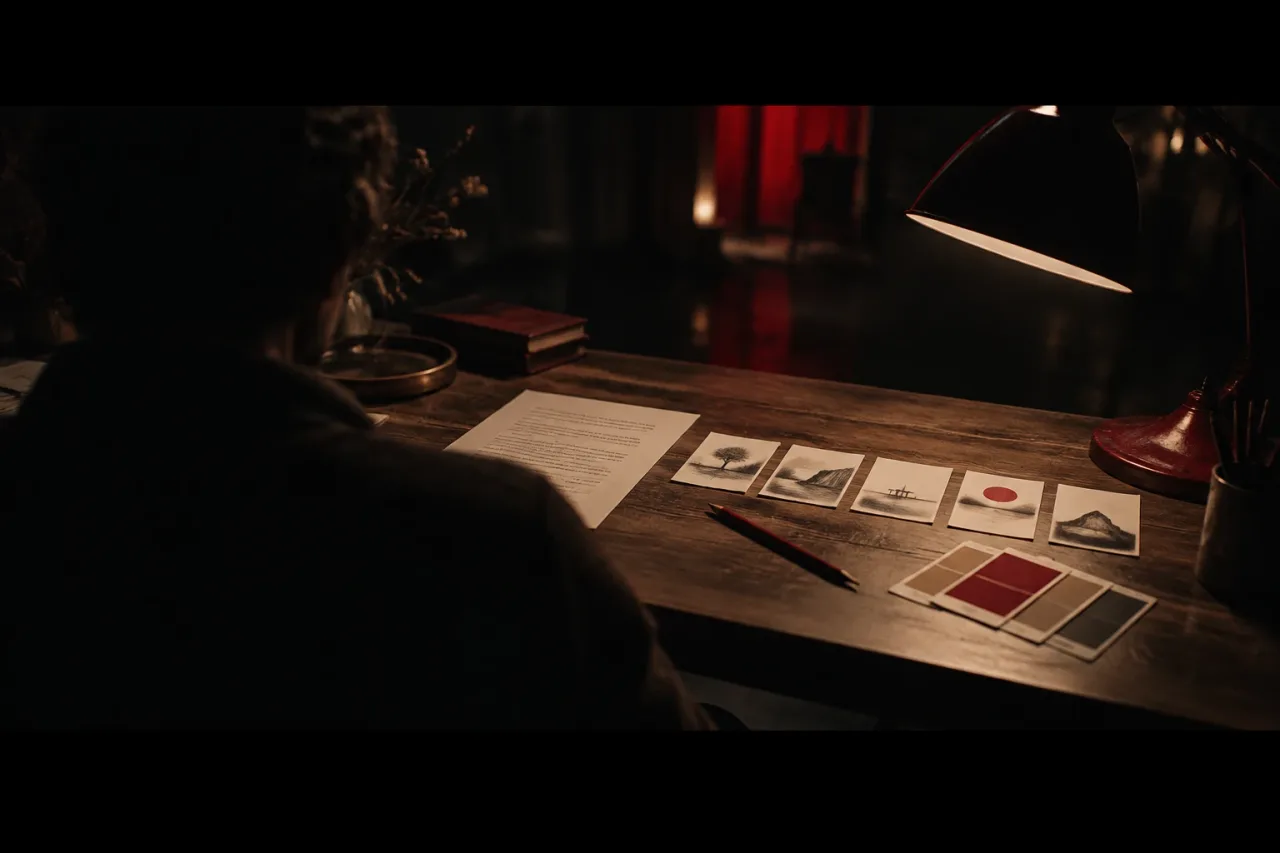
The short version
A treatment tells people what the video is. A storyboard shows what the camera sees at each point in the song. One is words and reference images, the other is frames in order.
Write the treatment first. A storyboard drawn without one is a pile of good frames with no reason to sit together.
Why they are different documents
A treatment runs one or two pages. It holds the idea in two sentences, the location, the light, the colour, how the singer performs and a few reference images. A label, a manager or a friend lending a flat reads it and says yes or no. Our guide to writing a one-page treatment in 90 minutes covers that page.
A storyboard is for the shoot. Each frame carries a framing, an action and a length in seconds. Twelve frames at 6 seconds each cover 72 seconds, so you see at once how much of a three-minute song you have planned. It becomes your shot list on the day.
How to use both, step by step
- Write the treatment. Say the location, the light (3200K tungsten lamps against a blue wall, for example) and how the edit moves.
- Pin three to six reference images beside it. Milanote holds notes, images and links on one board, which suits this job.
- Get a yes from whoever needs to give one, including the person who owns the location.
- Split the song into verse, chorus and bridge, and count the bars in each.
- Draw one frame per planned shot. Stick figures work. Boords and StudioBinder both make storyboards, and each has a free plan with limits.
- Number the frames and write the framing and seconds under each. Those notes become the day’s shot list.
If you cannot choose between the two boards, Milanote vs Boords sets out the split.
When it does not work
A vague reply to your treatment usually means the idea is too loose. Add one shot written out in full. For example: a locked-off 2.39:1 frame of the singer at a kitchen table, lamp on the left, held for 20 seconds with no cut. People answer a picture faster than an adjective.
If the storyboard will not come together, the treatment has a gap. It is usually the chorus. Decide what changes in the picture when the chorus lands, then draw that change.
If you cannot draw, shoot phone stills of a friend standing in each spot and use those as frames. Only use locations and people you have permission to film.
A common mistake
Sending a storyboard alone as the pitch leaves the reader guessing at the mood and the reason for the shots. Twenty frames with no words invite twenty questions.
Sending a treatment alone to a crew leaves them guessing at framing. Words like moody and cinematic cannot be lit or lensed. Give the pitch to the people who decide, and give the frames to the people who shoot.